
Why A Neurotech VC Bet On Anthropic: Intelligence, Interpretability, and the NeuroAI Stack
May 1, 2026 | Ariane Tom, PhD
When Kaleida Capital obtained exposure to Anthropic in 2024, I often received the same question from fellow investors:
Why would a neurotechnology-focused firm include a frontier AI company in its investment strategy?
The answer goes to the heart of Kaleida’s NeuroAI thesis. We do not define neurotechnology narrowly as only brain-computer interfaces, implants, or medical devices. Those are important categories, but they are not the full landscape. At Kaleida, we focus on the infrastructure emerging at the intersection of neural data, artificial intelligence, computation, and human cognition. From that perspective, Anthropic was not a departure from our thesis — it was a direct expression of it.
The human brain remains the most advanced intelligence system we know: adaptive, energy-efficient, context-sensitive, and capable of learning from sparse, noisy, multimodal information. Artificial intelligence is now beginning to approach some of these capabilities through systems that can reason, interpret language, write code, manipulate abstractions, and increasingly operate across modalities. The convergence between biological and artificial intelligence is no longer theoretical — it is becoming one of the defining technology shifts of the next decade.
Neurotechnology Is Bigger Than Devices
When many people hear “neurotechnology,” they think of brain-computer interfaces, EEG headsets, deep brain stimulation, neural prosthetics, or implantable devices. Those are all part of the field. But Kaleida’s definition is broader: neurotechnology includes systems that measure, model, interface with, or learn from neural systems.
That broader definition matters because the field is no longer limited to hardware. Some of the most important value creation will come from software, data infrastructure, computational models, and AI systems that help us understand, emulate, or extend intelligence.
The neurotechnology landscape includes:
Medical neurotechnology: implantable devices, neural prosthetics, closed-loop therapeutics, neuromodulation, and brain-computer interfaces.
Precision neuroscience: platforms that use neural data, biomarkers, and computational models to improve diagnosis, patient stratification, and treatment response prediction.
Consumer and performance neurotechnology: wearables, sleep technology, cognitive performance tools, and human-computer interaction systems.
Computational neurotechnology: AI systems and computing architectures informed by neural principles, including models that learn, reason, interpret, and generate information at scale.
Once the field is understood this way, Anthropic does not look like an outlier. It sits within the computational intelligence layer of the NeuroAI stack.
The Brain Is the Original Intelligence Architecture
The human brain runs on roughly 20 watts of power while supporting perception, memory, movement, language, emotional regulation, prediction, and decision-making. It does this continuously, in real time, across changing environments. By comparison, modern AI systems require vast computational infrastructure to train and deploy, even as their capabilities continue to advance rapidly.
That efficiency gap is not just a technical curiosity. It is one of the central design challenges in artificial intelligence. Neuroscience has spent decades studying how biological systems encode information, compress signals, generalize from limited data, and adapt through experience. Concepts such as sparse coding, predictive processing, hierarchical representation, reinforcement learning, and memory consolidation have all shaped how researchers think about artificial intelligence.
The brain is not merely a metaphor for AI. It is the original proof that intelligence can emerge from distributed, adaptive, energy-efficient systems. That is why neuroscience continues to matter for AI — and why AI increasingly matters for neuroscience.
Modern AI is not a replica of the brain. The architectures are different, the training dynamics are different, and the substrate is different. But the conceptual overlap is increasingly important. Both biological and artificial intelligence systems depend on representation, attention, memory, prediction, adaptation, and feedback. For a neurotechnology investor, that convergence is central to the opportunity.
Why Anthropic Fit Kaleida’s Strategy
There are many AI companies, and most would not fit Kaleida’s mandate. Anthropic stood out because the company was building with a level of technical seriousness, scientific ambition, and infrastructure relevance that aligned with how we evaluate emerging NeuroAI platforms.
At a high level, Anthropic represented three qualities we look for:
A foundational role in the AI ecosystem. Anthropic is not building a narrow application layer. It is building frontier models and infrastructure that can influence how software, research, work, and computation evolve.
A serious approach to model behavior and interpretability. The company has consistently emphasized not only capability, but also model reliability, alignment, and the internal mechanics of how large-scale AI systems behave.
A clear position within the convergence of biological and artificial intelligence. The work sits directly in the zone where intelligence becomes measurable, programmable, scalable, and increasingly interpretable.
For Kaleida, this mattered because NeuroAI is not only about reading from the brain. It is also about understanding intelligence as a computational phenomenon — biological, artificial, and eventually hybrid.
Building Intelligent Systems Requires Understanding Model Behavior
One of the most compelling aspects of Anthropic’s work is its emphasis on interpretability. In AI, interpretability is often discussed in the context of safety, governance, or trust. Those are important, but from a scientific perspective, interpretability is also something more fundamental: it is the attempt to understand how an intelligent system represents information internally.
That question is familiar to neuroscience. Much of modern brain science is an attempt to understand how neural systems encode sensory input, assign meaning, store memories, update beliefs, and generate behavior.
Interpretability research in artificial neural networks asks a parallel question: what is happening inside the model that allows certain outputs, capabilities, errors, or behaviors to emerge?
This is one of the reasons Anthropic was compelling. The company was not simply scaling models for performance. It was also investing in understanding model behavior at a mechanistic level. For an investor trained in neuroengineering, that distinction matters. Capability alone is not enough. The most important platforms are those that can become more powerful and more understandable over time.
Neuroscience and AI Propel and Enable One Another
Kaleida’s NeuroAI thesis is built on the view that the next major platform shift will emerge from the convergence of neuroscience, AI, and computation. That convergence will not appear in only one form. It will include clinical platforms, neural interfaces, data infrastructure, foundation models, intelligent agents, and new computing architectures.
The relationship between neuroscience and AI is increasingly bidirectional:
AI is accelerating neuroscience by helping researchers analyze complex imaging, electrophysiology, behavioral, genomic, and clinical datasets at a scale that was previously impossible.
Neuroscience continues to inform AI by offering principles for efficient learning, embodied intelligence, attention, memory, adaptive control, and robustness.
The intersection is creating new company categories across neural decoding, AI-enabled drug development, neurodata infrastructure, cognitive AI systems, human-computer interaction, and brain-inspired computing.
Anthropic matters to this thesis because frontier AI increasingly functions as infrastructure. It is a general-purpose layer that can accelerate research, software development, knowledge work, scientific discovery, and eventually biological interpretation. In neuroscience and healthcare, these capabilities can support everything from data analysis to clinical decision support, drug development, and patient-specific modeling.
This does not mean every frontier AI company belongs in a NeuroAI portfolio. It means that select AI companies may become essential to the infrastructure through which NeuroAI develops.
Kaleida’s Unique Investment Lens in Action
Kaleida Capital was built around a specific conviction: the next wave of breakthrough companies will emerge from the overlap between neuroscience, artificial intelligence, and frontier computation. To evaluate that opportunity correctly, investors need more than surface-level enthusiasm for AI or neurotechnology. They need enough technical fluency to distinguish real platform potential from attractive language.
Our background in neuroengineering is not a branding detail — it shapes how we evaluate companies. We can read the primary literature, assess technical claims, understand where biological analogies are useful and where they are overstated, and identify when a company is building toward a durable infrastructure layer rather than a narrow product.
Kaleida’s exposure to Anthropic came from that same process. It was not a decision driven by hype — it reflected a broader conviction around the convergence of biological and artificial intelligence, and the view that understanding intelligence may become one of the most important investment opportunities of our time.
Ariane Tom, PhD is Founder and Managing Director of Kaleida Capital, a venture capital firm investing where precision neuroscience, brain-computer interfaces, and frontier AI converge. A Stanford-trained neuroengineer and venture investor, Ariane leads Kaleida’s thesis development, investment strategy, and ecosystem-building across one of the most important emerging frontiers in technology and medicine.
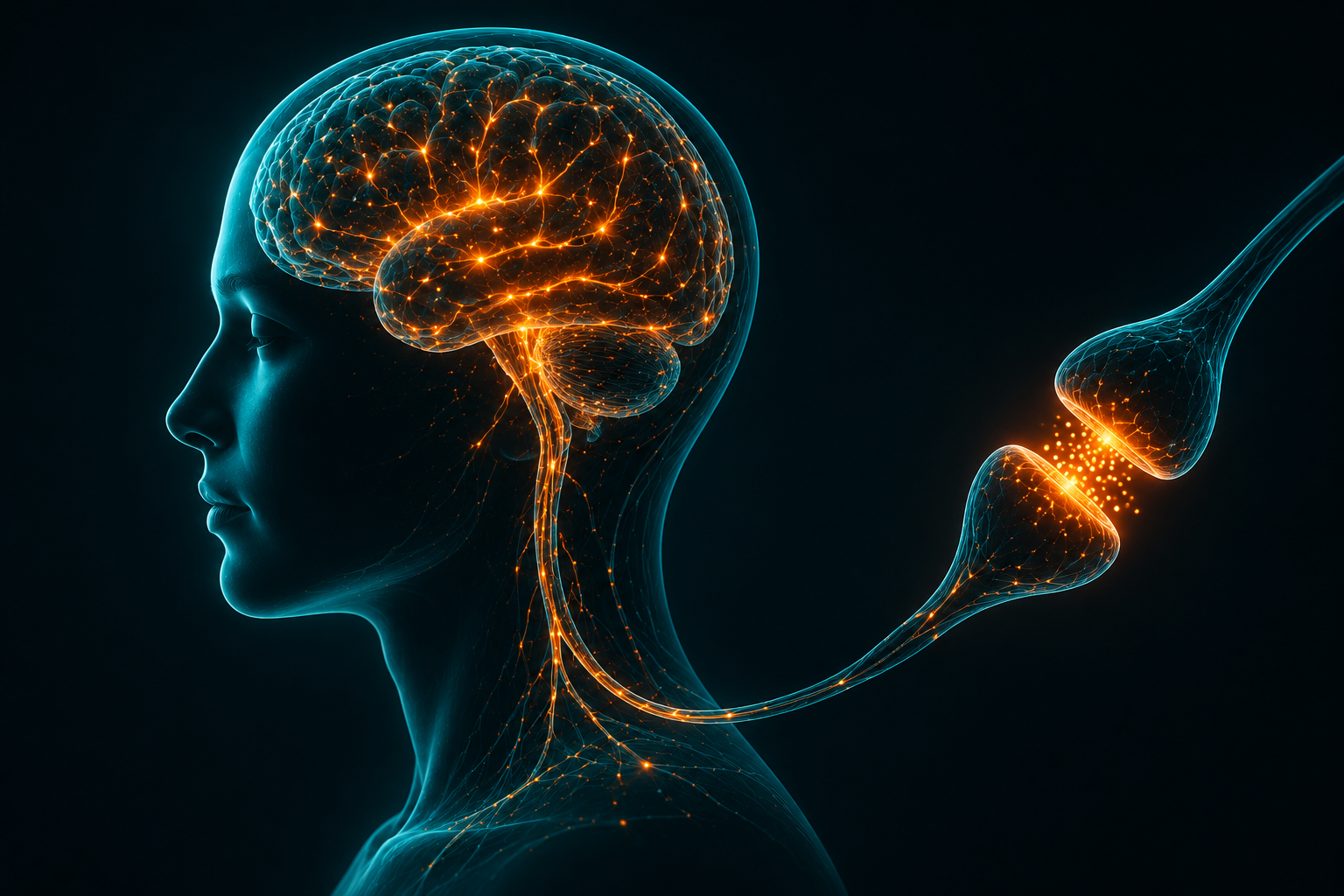
Kaleida Capital invests in NeuroAI infrastructure — where neural data, frontier AI, and next-generation computation are beginning to reshape healthcare, intelligence, and human capability.
Connect with us if you are building, investing in, or studying the convergence of neuroscience and artificial intelligence — we welcome the conversation.