
Foundation Models for the Brain: Why Neural Data is a Critical Asset for AI
April 15, 2026 | Sharena Rice, PhD and Ariane Tom, PhD
For most of AI’s history, machines depended on humans to define the relevant features before learning could begin. Deep learning changed that. Given enough data, neural networks could discover internal representations on their own — learning patterns in language, images, code, and biology without humans specifying every rule in advance.
Foundation models extended that shift. Instead of training a new model from scratch for every task, researchers began training large models on vast unlabeled datasets, allowing them to learn the structure of a domain and adapt across many downstream applications. GPT, CLIP, and other foundation models demonstrated the power of this approach across language and vision.
The next frontier is not simply more text, more images, or more compute. It is richer signal.
Neural data is among the most information-dense and underutilized datasets available. When a person recognizes a face, reaches for a cup, recalls a memory, or prepares to speak, the brain generates signals that no sentence, photograph, or behavioral record fully captures. These signals are closer to the source of perception, intention, and meaning than the outputs humans produce after the fact.
That is why foundation models for the brain matter — They could change how brain-computer interfaces adapt to individual users, how neurological and psychiatric conditions are measured, how AI systems become more grounded in human experience, and how we build technologies that respond to cognition in real time.
At Kaleida Capital, this is central to our NeuroAI thesis:
The next generation of AI will not be defined only by larger models, but by higher-quality data layers — and neural data may become one of the most important.
Traditional Foundation Models Are Hitting a Data Ceiling
The last decade of AI progress was driven by a convergence of better algorithms, larger datasets, more compute, and model architectures that could scale. But the limiting factor is shifting. In many domains, the question is no longer whether we can train larger models. It is whether the data being used contains enough signal to support the next stage of generalization.
Text remains powerful, but it is still a proxy. Models trained primarily on language learn statistical regularities in what humans have written, not direct representations of the physical, biological, or embodied world. That limitation becomes visible when models are asked to reason about causal structure, physical constraints, internal states, or biological context — precisely the areas that matter in healthcare, assistive technology, robotics, and human-computer interaction.
The default response has been to scale data and compute further. But text-only scaling faces diminishing returns. The highest-quality parts of the web have already been heavily processed, and marginal new text is often noisier, more repetitive, or lower signal. Synthetic data may help in some settings, but it can also reinforce existing model assumptions rather than introduce genuinely new grounding.
This is why the next major gains may come from better data, not simply more data.
For AI systems that need to understand perception, intention, movement, disease, or cognition, neural data offers something qualitatively different: a direct biological signal tied to how humans experience and act in the world.
Neural Data Is Fundamentally Different
Text, images, and audio are records of what humans produce. Neural data is a record of the biological activity that helps produce perception, thought, intention, and action. It is continuous, high-dimensional, time-sensitive, and closely linked to the internal states that downstream behavior only partially reveals.
That distinction matters. A photograph captures what was seen. A sentence captures what was said. A neural recording can capture how the brain processed the image, prepared the words, or formed the intention before the action occurred. For applications rooted in human perception and behavior, that proximity to the source is the signal.
Biology also creates complexity. Every brain is shaped by genetics, development, injury, disease, and lived experience. Individual neural signals are variable and noisy. But beneath that variability, human brains share a conserved architecture: common cell types, layered cortical organization, recurring circuit motifs, and broadly similar regions for sensory processing, movement, language, memory, and executive function. That shared structure makes population-level patterns measurable, even when individual differences remain important.
The opportunity is not to treat neural variability as noise. It is to model both the shared structure and the individual variation. This is the foundation model logic applied to the brain: pretrain on large-scale neural data to learn generalizable structure, then adapt to specific users, diseases, devices, tasks, or contexts.
The Infrastructure Layer is Being Built Now
The scientific case for neural foundation models is becoming stronger, but the infrastructure is still early. Historically, high-quality human neural datasets have been concentrated in specialized labs, hospitals, and clinical studies. They are often small, fragmented, and collected under different protocols, with different devices, labels, metadata, and quality standards. That makes it difficult to train models that generalize across people, sites, sessions, and tasks.
For neural foundation models to become scalable, the field needs infrastructure that supports:
Standardized data capture: consistent protocols across devices, sites, and patient or user populations.
High-quality metadata: labels that preserve context, task structure, behavioral state, disease status, device configuration, and longitudinal history.
Continuous quality control: systems that detect artifacts, drift, noise, and site-specific bias before models learn the wrong signal.
Longitudinal continuity: datasets that follow individuals over time, allowing models to learn within-person change as well as population-level structure.
Governance and access rights: clear ownership, consent, privacy, and reuse frameworks for data that sits unusually close to human identity and experience.
Validation systems: benchmarks that test models across held-out subjects, institutions, devices, and time periods, not only within a single lab’s dataset.
This is why proprietary data positions may matter in neural AI. Open datasets are valuable and scientifically important, but they are often inconsistent in labeling, protocols, and documentation.
A company that controls high-quality, longitudinal, well-labeled neural data may have an advantage not only in quantity, but in consistency, validation, and reuse.
The gap in the field is not a lack of scientific imagination. It is a lack of scalable infrastructure. The groups that solve this will be positioned to build not only models, but an entirely new category of health, interface, and human performance applications.
The Shift from Compelling Demos to Scaled Discipline
Brain foundation models are early, but the early evidence is meaningful. Across neuroimaging, electrophysiology, and brain-computer interfaces, researchers are beginning to show that neural data contains transferable structure — patterns that can be learned in one setting and adapted to another.
In neuroimaging, foundation-style pretraining is being used to learn general anatomical and functional representations from large MRI datasets, then adapt those representations to downstream clinical tasks with less labeled data. This matters because clinical machine learning has historically been brittle across hospitals, scanners, and protocols. A model that can learn more generalizable brain representations could improve diagnosis, segmentation, disease tracking, and clinical trial design.
In brain-computer interfaces, one of the major historical bottlenecks has been calibration. Many systems require substantial per-user setup because neural signals vary across individuals and change over time. Sequence models and self-supervised approaches are beginning to address this by learning shared neural structure while preserving individual variation. Solving that problem is essential if BCIs are going to move from research demonstrations to scalable patient products.
In neural decoding, researchers are increasingly using cross-modal approaches that align neural recordings with pretrained vision, language, or speech models. This reduces reliance on expensive manual labels and allows neural data to be mapped into richer representational spaces. The result is not only better decoding, but a more powerful way to connect brain activity to perception, language, and meaning.
Several technical directions are especially important:
Self-supervised learning: training models on unlabeled neural streams to learn useful representations before task-specific fine-tuning.
Cross-subject transfer: separating shared neural structure from individual variation to reduce calibration burden.
Multimodal alignment: linking neural signals with images, language, speech, movement, behavior, and physiological data.
Digital twins: building computational models of neural systems that can be tested in simulation and used to explore mechanisms beyond what direct recording allows.
Robust benchmarking: designing evaluations that prevent models from relying on spurious experimental cues or site-specific artifacts.
The field is moving from compelling demonstrations toward engineering discipline. That transition is essential. The difference between a research result and a product is not whether a model works once. It is whether it works reliably across users, settings, time, and clinical or operational constraints.
Commercial Value Begins Where Neural Signals Change Decisions
The clearest near-term opportunity for neural foundation models is measurement. Before neural AI transforms treatment, augmentation, or human-computer interaction, it must first improve how we measure brain state, disease state, intention, and change over time.
In healthcare, this is especially important. Mental health and neurology still rely heavily on subjective reports, episodic clinical observations, and coarse diagnostic categories. These tools are useful, but they are incomplete. They often fail to capture biological heterogeneity, within-person change, or early signals of disease progression.
Neural foundation models could support more objective and longitudinal measurement across several areas:
Patient stratification: identifying biologically meaningful subgroups within broad diagnostic categories.
Treatment response prediction: matching patients to interventions based on neural signatures, not diagnosis alone.
Clinical trial enrichment: selecting participants more likely to respond to a drug or device mechanism.
Disease monitoring: tracking neural changes over time, including subtle changes before symptoms become obvious.
Closed-loop systems: using neural signals to guide adaptive stimulation, dosing, feedback, or digital intervention.
Identity and state tracking: enabling secure, person-specific neural signatures for interfaces, assistive systems, and human performance tools.
The companies most likely to succeed will not begin with vague claims about decoding the brain. They will anchor on narrow, high-value use cases that generate ongoing neural data through real-world use. Each interaction can become a training signal, creating a compounding dataset and a durable advantage over time.
This is where the economics become powerful. A product that solves an immediate problem while continuously improving its data asset can expand into adjacent applications. In that sense, neural foundation models are not just technical systems. They are potential platform businesses.
What Kaleida Looks for in NeuroAI Companies
At Kaleida Capital, we are focused on the infrastructure layer that will make NeuroAI possible. Neural data may become one of the most valuable datasets of the next decade, but only if it is captured, governed, validated, and applied with technical rigor.
The most important companies in this category will likely share several characteristics:
High-signal data access: proprietary or privileged access to neural datasets that are longitudinal, well-labeled, and difficult to replicate.
Clear initial use case: a focused product wedge in healthcare, interfaces, human performance, or research infrastructure.
Strong validation discipline: evidence that models generalize across subjects, sites, sessions, and devices.
Regulatory and governance sophistication: credible handling of privacy, consent, clinical claims, and data rights.
Real-time system capability: low-latency inference and feedback loops where timing determines product quality.
Expansion potential: a path from one validated application into a broader platform.
The question is not whether neural data will matter for AI. It is who will build the infrastructure to use it well.
For Kaleida, this is the heart of the opportunity: the next generation of AI will require new data layers, and neural data is among the richest we have yet to fully leverage. The companies that transform neural signals into scalable models, validated products, and defensible infrastructure may define a new era of precision neuroscience, digital interfaces, and human-centered AI.
Sharena Rice, PhD is a Venture Fellow at Kaleida Capital, where she contributes to research, technical diligence, and thesis development across emerging NeuroAI opportunities.
Ariane Tom, PhD is Founder and Managing Director of Kaleida Capital, a venture capital firm investing where precision neuroscience, brain-computer interfaces, and frontier AI converge. A Stanford-trained neuroengineer and venture investor, Ariane leads Kaleida’s thesis development, investment strategy, and ecosystem-building across one of the most important emerging frontiers in technology and medicine.
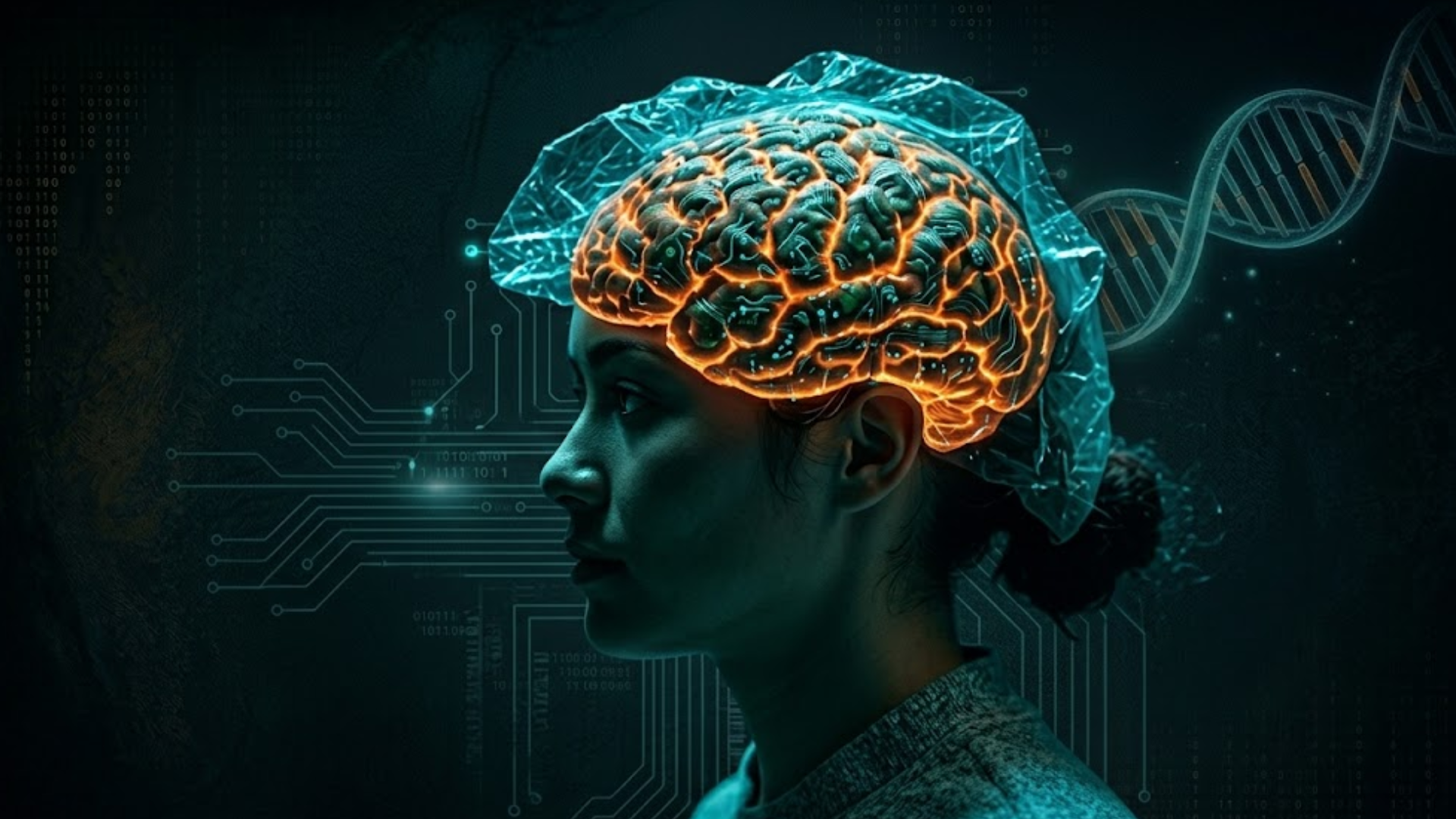
Kaleida Capital invests in NeuroAI infrastructure — where neural data, frontier AI, and next-generation computation are beginning to reshape healthcare, intelligence, and human capability.
Connect with us if you are building, investing in, or studying the convergence of neuroscience and artificial intelligence — we welcome the conversation.