
How Kaleida Capital is Shaping Neurotech's Future
April 4, 2025 | Ariane Tom, PhD
After decades of foundational neuroscience and engineering work, neurotechnology is entering a more commercially relevant phase. Brain-computer interfaces are beginning to restore communication for patients with paralysis and ALS. Adaptive decoding systems are improving how neural signals are translated into movement, speech, and digital control. Advances in AI are making it possible to extract more meaning from noisy, high-dimensional neural data. At the same time, miniaturized hardware, wireless power, improved surgical techniques, and more sophisticated regulatory pathways are bringing the field closer to real-world deployment.
While Neuralink has captured public attention, the future of neurotechnology will not be defined by one company. It will be built by an ecosystem: high-bandwidth interfaces, minimally invasive delivery systems, sensory restoration platforms, wireless power infrastructure, neural data systems, and AI models that can interpret and adapt to individual users over time.
That is where Kaleida Capital is focused. We invest in the infrastructure layer of neurotechnology and NeuroAI — the companies turning neural signals into clinically useful, computationally powerful, and commercially scalable systems.
Kaleida’s Thesis: Where Neural Data Becomes Intelligence
Kaleida Capital was built around a specific conviction: neurotechnology is moving beyond devices into platforms. The most important companies in the next decade will not simply record neural signals or stimulate neural tissue. They will create systems that transform neural data into actionable intelligence.
This shift matters because the brain is not just another therapeutic target. It is the biological system through which perception, movement, memory, language, emotion, and decision-making emerge. As AI systems become more capable and neural interfaces become more usable, the boundary between biological and artificial intelligence is becoming one of the most important frontiers in technology.
Kaleida’s investment philosophy is grounded in four principles:
Neural data is a strategic asset. Companies that can capture, structure, and interpret high-quality neural data may build defensible platforms across medicine, digital interfaces, and human performance.
Software and AI will determine interface quality. Hardware creates access to the signal, but machine learning determines whether that signal becomes useful.
Biological integration is a moat. Chronic performance, biocompatibility, surgical feasibility, and neuroplastic adaptation are not details; they determine whether a product can work in the body over time.
Clinical utility comes first. The strongest companies begin with high-need medical applications where the value of restoring communication, movement, sensation, or therapeutic control is clear.
In this market, technical nuance matters. Invasive and non-invasive systems are not interchangeable. Motor and sensory interfaces have different development paths. Chronic implants, acute mapping tools, wearable systems, and closed-loop therapeutics each face different engineering, regulatory, and commercial constraints. Kaleida’s edge comes from understanding those distinctions early.
What Distinguishes Kaleida’s Approach
Neurotechnology is a field where elegant demos can obscure difficult product realities. A system may work in a controlled setting but fail when exposed to biological variability, surgical constraints, signal drift, immune response, patient fatigue, or real-world latency requirements. This is why sector expertise matters.
Kaleida evaluates companies across the full neural technology stack:
Signal fidelity: How effectively does the system capture neural or physiological signals, and does the signal quality support the intended use case?
Computational sophistication: Can the platform translate complex, noisy biological data into reliable outputs with acceptable accuracy and latency?
Biological integration: Does the technology work with the body’s immune response, tissue mechanics, and neuroplasticity over time?
Clinical translation: Is the product aligned with a credible care pathway, regulatory strategy, and reimbursement or commercial adoption model?
Founder depth: Does the team combine neuroscience, engineering, software, clinical insight, and operational discipline?
The best neurotechnology companies are rarely “just hardware” or “just software.” They are integrated systems companies. They must solve across materials, biology, signal processing, AI, workflow design, regulatory strategy, and user experience. Missing one layer can limit the entire platform.
That is also why Kaleida looks for companies with technical architectures that can compound. A strong neural interface should not only solve one problem; it should generate data, improve models, support additional applications, and become more valuable as the system is used.
Portfolio Examples: Building the Neurotech Infrastructure Stack
Kaleida’s portfolio reflects this infrastructure view. We are not simply investing in isolated BCI companies. We are backing complementary layers of the neurotechnology stack: high-bandwidth recording, minimally invasive access, sensory restoration, and enabling infrastructure.

Paradromics: High-Bandwidth Neural Interfaces
Paradromics is focused on one of the central constraints in brain-computer interfaces: bandwidth. In neural interfaces, more reliable access to more neural signals can enable richer control, faster communication, and more sophisticated applications. High-bandwidth systems are especially important for patients with severe motor impairment, where the goal is to restore communication and digital access through direct neural decoding.
The company’s Connexus platform is designed to record from many individual neurons and translate those signals into high-performance digital control. For Kaleida, Paradromics represents the high-bandwidth thesis: if brain-computer interfaces are going to move beyond simple cursor control toward richer communication and control systems, signal quality and channel count matter.
Paradromics’ clinical progress marks an important step in translating high-data-rate neural interfaces from engineering concept toward human use. The company also reflects a broader theme in the field: the next generation of BCIs will be judged not by novelty alone, but by whether they can deliver reliable performance in patients with serious unmet needs.
Synchron: Minimally Invasive Brain-Computer Interfaces
Synchron addresses a different but equally important bottleneck: surgical access. Many high-performance neural interfaces require open-brain procedures, which can limit patient eligibility and adoption. Synchron’s endovascular approach is designed to access neural signals through the vasculature, reducing the invasiveness of implantation while targeting clinically meaningful digital control.
For Kaleida, Synchron represents the accessibility thesis. Medical devices succeed not only because they work technically, but because they can be delivered safely and adopted within real clinical workflows. By using an endovascular route, Synchron has created a differentiated approach to BCI deployment that could expand the eligible patient population.
The company’s work in hands-free, voice-free digital access for patients with motor impairment also points toward a larger interface future. The first applications are medical and assistive. Over time, the underlying logic — neural input integrated into digital systems — may influence broader human-computer interaction.

Science Corp: Sensory Restoration
Science Corp reflects another major frontier: restoring sensory function. While much of the BCI market focuses on motor output, sensory restoration addresses a different dimension of neural interface value. Vision restoration, in particular, combines neuroscience, implantable technology, image processing, and neural stimulation into a highly complex but potentially transformative platform.
Science’s PRIMA system is designed to restore visual perception by bypassing damaged photoreceptors and stimulating downstream retinal circuitry. This approach preserves aspects of the body’s existing visual processing architecture rather than asking the brain to interpret an entirely foreign signal.
For Kaleida, Science represents the sensory interface thesis: some of the largest opportunities in neurotechnology may come not only from controlling external devices, but from restoring lost channels of human experience.
Resonant Link: Wireless Power Infrastructure
Resonant Link is not a neural interface company in the narrowest sense, but it addresses a critical infrastructure constraint for implanted and wearable systems: power. Neural devices are limited by battery life, charging burden, heat, form factor, and patient usability. As devices become more capable and always-on, power delivery becomes increasingly strategic.
Resonant Link’s wireless power technology is designed to support efficient charging across medical devices, industrial systems, and robotics. For neurotechnology, this type of infrastructure can be essential. A neural implant that performs well but is difficult to power or maintain will face adoption barriers. Better wireless power can improve user experience, reduce device burden, and enable more ambitious chronic systems.
For Kaleida, Resonant Link represents the enabling infrastructure thesis: the neurotechnology market will depend not only on interfaces, but on the power, data, and compute systems that allow those interfaces to function reliably in the real world.
The Convergence Accelerating NeuroAI
The neurotechnology market is being accelerated by the convergence of several technical forces. The most important is AI. Neural data is complex, noisy, and variable across individuals. Machine learning is increasingly essential for decoding intent, adapting to signal drift, improving calibration, and personalizing interfaces over time.
Several areas are especially important:
AI-powered decoding: Models that improve the translation of neural signals into speech, movement, cursor control, or other outputs.
Closed-loop systems: Platforms that both read and respond to neural activity, enabling adaptive therapies for neurological and psychiatric conditions.
Multimodal interfaces: Systems that combine neural signals with eye tracking, muscle activity, speech, behavior, or physiological data to improve reliability.
Edge computing: Low-latency processing closer to the device, which is essential for real-time control and feedback.
Neural data infrastructure: Standards, datasets, validation systems, and governance frameworks that allow models to generalize across users and settings.
This convergence is what turns neurotechnology into NeuroAI. The opportunity is no longer limited to recording signals from the brain. It is to build systems that can learn from neural data, adapt to the user, and improve with continued use.
The companies that succeed will likely be those that create compounding loops: better interfaces generate better data; better data improves models; better models improve user experience; and better user experience increases adoption. That loop is where defensibility can emerge.
Why This Moment Matters
Neurotechnology is entering a new era. The field is moving from proof-of-concept demonstrations toward deployable systems that restore function, create new interfaces, and generate high-value neural data. The transition will not happen all at once, and it will not be led by a single company. It will be built through a stack of complementary technologies: interfaces, software, data, power, compute, clinical workflows, and adaptive AI.
For Kaleida Capital, this is the opportunity. We believe the next generation of category-defining neurotechnology companies will emerge where biological intelligence and artificial intelligence begin to work together. Some will restore lost function. Some will improve how neurological and psychiatric disease is measured and treated. Some will create new ways for humans to interact with machines. Others will build the enabling infrastructure that makes the entire field possible.
The market is still early, but the direction is clear. Neural data is becoming a new foundation for medicine, interfaces, and computation. The companies that can capture it responsibly, interpret it accurately, and translate it into products that matter will shape the next decade of neurotechnology.
Kaleida Capital is built for that frontier.
Ariane Tom, PhD is Founder and Managing Director of Kaleida Capital, a NeuroAI-focused venture capital platform investing across neural data, precision neuroscience, brain-computer interfaces, and frontier AI. A Stanford-trained neuroengineer and frequent speaker on neurotechnology and AI, she writes on the companies, technologies, and market shifts shaping the future of human-machine intelligence.
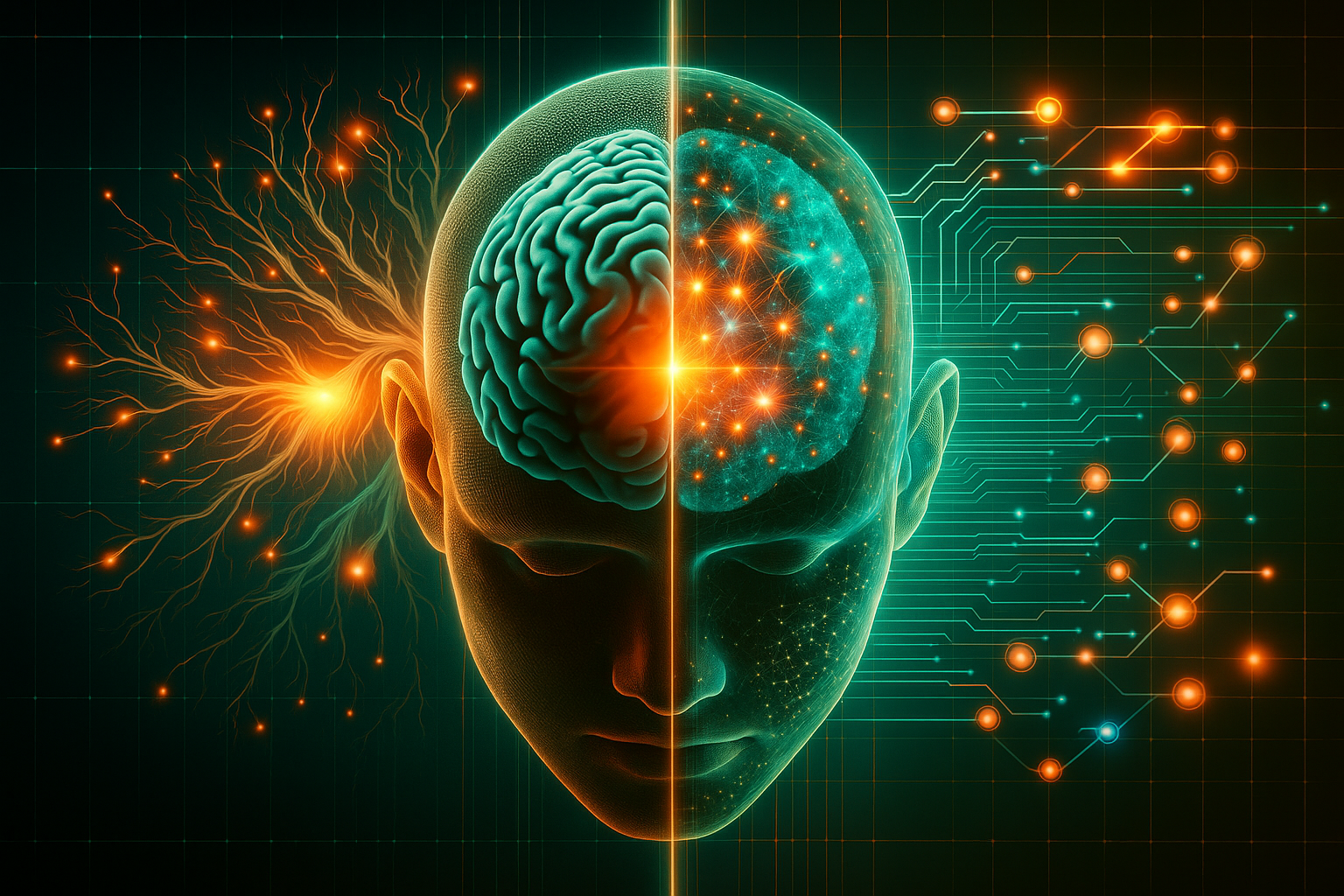
Kaleida Capital invests in NeuroAI infrastructure — where neural data, frontier AI, and next-generation computation are beginning to reshape healthcare, intelligence, and human capability.
Connect with us if you are building, investing in, or studying the convergence of neuroscience and artificial intelligence — we welcome the conversation.