
NeuroAI Is Here: Why Investors, Engineers and Founders are Paying Attention
January 16, 2026 | Ariane Tom, PhD
NeuroAI is moving from research concept to investable category. For decades, brain-computer interfaces, neural decoding, and computational neuroscience advanced largely in specialized labs and clinical settings. The field produced remarkable science, but commercial adoption was constrained by hardware limitations, small datasets, high latency, difficult calibration, and unclear near-term markets.
That is beginning to change. Over the past several years, clinical brain-computer interface systems have restored digital communication and computer control for patients with paralysis and ALS. Companies such as Neuralink, Synchron, Paradromics, BlackRock Neurotech, Precision Neuroscience, and others have brought the field into broader public and investor awareness. At the same time, AI models have become more capable of interpreting complex, high-dimensional signals — exactly the type of data neural systems produce.
For Kaleida Capital, this is the central point: NeuroAI is not simply brain-computer interfaces plus artificial intelligence. It is the emerging infrastructure layer where neural data, machine learning, real-time computation, and human intent begin to converge. That convergence has implications for healthcare, digital interfaces, human performance, and eventually the way people interact with intelligent systems.
The question is no longer whether NeuroAI is scientifically interesting — It is which companies can turn neural signals into reliable products, defensible datasets, and scalable platforms.
NeuroAI Connects Neural Signals to Adaptive Systems
NeuroAI sits at the intersection of neuroscience and artificial intelligence. It includes systems that can measure, interpret, predict, or respond to neural activity using computational models.
In its simplest form, NeuroAI allows machines to learn from the brain.
In more advanced forms, it enables adaptive systems that respond to a person’s intent, state, or behavior in real time.
Traditional brain-computer interfaces focused primarily on detecting neural signals and translating them into outputs, such as moving a cursor, selecting letters, or controlling a prosthetic device. NeuroAI adds a more adaptive layer: models that learn a user’s neural patterns, improve with continued use, infer intent more accurately over time, and eventually anticipate or personalize responses based on cognitive state.
That distinction matters. A traditional BCI might detect that a user intends to move a hand. A NeuroAI system may learn how that user’s intention is encoded, adapt as signals shift, predict the intended movement, and improve the interface through feedback. The value is not only in sensing the brain. It is in building intelligent systems that become more useful as neural data accumulates.
This is why the category is broader than medical implants. NeuroAI includes:
Brain-computer interfaces: implanted or minimally invasive systems that translate neural signals into digital outputs.
Neural decoding platforms: software that interprets speech, movement, attention, or intent from neural activity.
Precision neuroscience tools: systems that use neural data to improve diagnosis, patient stratification, and treatment response prediction.
Adaptive human-computer interfaces: digital systems that respond to cognitive load, attention, fatigue, or user intent.
Brain-inspired AI and computing: architectures informed by principles of biological intelligence, including efficiency, adaptation, and distributed representation.
From an investment perspective, the most important companies will not merely produce interesting neural readouts. They will transform neural signals into useful, repeatable, and commercially valuable systems.
Four Concurrent Forces Make NeuroAI Investable
The field is reaching an inflection point because several technical waves are converging at once. None of these advances alone would be sufficient. Together, they are making NeuroAI more viable.
First, neural data access is improving. Implantable and minimally invasive systems are capturing higher-resolution signals, while non-invasive and wearable systems are becoming more practical for broader applications. More channels, better signal quality, improved form factors, and longer-term recording stability are expanding what can be measured.
Second, AI models are better suited to neural data than earlier computational approaches. Neural signals are temporal, noisy, high-dimensional, and highly variable across individuals. Modern machine learning — including sequence models, self-supervised learning, and multimodal architectures — is better equipped to extract structure from these signals and adapt across sessions, users, and tasks.
Third, real-time computing has become more capable. For NeuroAI, latency is not a secondary feature. It is central to user experience. In a prosthetic, communication interface, or closed-loop therapeutic system, delays can disrupt the feedback loop that allows the brain and device to co-adapt. The most compelling systems will need fast inference, reliable signal processing, and tight integration between hardware and software.
Fourth, the market is beginning to understand that neural interfaces are not only therapeutic tools. Medical applications remain the most important and near-term path for many companies, particularly for patients with paralysis, ALS, epilepsy, Parkinson’s disease, depression, and other neurological or psychiatric conditions. But the underlying infrastructure may eventually extend into communication, computing interfaces, human performance, and adaptive software.
For investors, the “why now” is not one headline or one company. It is the convergence of signal acquisition, AI model capability, real-time processing, and clear early use cases where the value of neural data is immediate.
Where the First Markets Are Emerging
The most credible near-term NeuroAI markets are those where neural signals can change an outcome that matters: restoring communication, improving treatment, enabling control, reducing clinical uncertainty, or creating a more adaptive interface.
Healthcare is the clearest starting point. For patients with severe paralysis or ALS, neural interfaces can restore forms of communication and digital access that would otherwise be unavailable. Speech decoding, cursor control, and assistive communication are not abstract demonstrations. They are high-value use cases where even incremental improvements can materially affect quality of life.
Precision neurotherapy is another important category. Neurological and psychiatric disorders are heterogeneous, and current treatment pathways often depend on subjective symptoms, delayed feedback, and broad diagnostic categories. NeuroAI could help make treatment more adaptive by measuring brain state, predicting response, and supporting closed-loop intervention.
Human-computer interaction is the longer-term interface opportunity. The mouse, keyboard, touchscreen, and voice interface each changed how people accessed computing. Neural interfaces may eventually add another layer: systems that respond to intent, attention, or cognitive state. Early applications will likely remain assistive or specialized, but the broader direction is clear. As computing becomes more immersive and intelligent, new input modalities will matter.
Key application areas include:
Assistive communication: restoring speech, typing, or digital control for patients with severe motor impairment.
Closed-loop therapeutics: adapting stimulation, dosing, or digital intervention based on real-time neural state.
Clinical decision support: using neural signals to improve diagnosis, stratification, or treatment response prediction.
Adaptive interfaces: allowing software, AR/VR systems, or devices to respond to attention, fatigue, cognitive load, or intent.
Human performance: measuring and optimizing focus, learning, sleep, training, or recovery in contexts where signal quality and validation are strong enough to support the claim.
The commercial test is not whether a system can decode something in a lab. It is whether the signal is reliable enough to change a decision, improve an outcome, or create a user experience that people and institutions will adopt.
What Separates NeuroAI Companies From Research Demos
NeuroAI is still early, which means investors need to distinguish between compelling demonstrations and scalable companies. The field is full of compelling demonstrations, but many will not translate into durable businesses. The most attractive opportunities will combine scientific credibility, engineering discipline, and a clear commercial approach.
Several diligence questions matter:
Does the company have access to high-quality neural data? The strongest companies will have proprietary or privileged access to datasets that are longitudinal, well-labeled, and difficult to replicate.
Can the system generalize across users and settings? Performance in one lab or one subject is not enough. Models need to work across sessions, environments, devices, and user variability.
Is the latency appropriate for the use case? Real-time or near-real-time performance is essential for many interface, prosthetic, and closed-loop applications.
Is there a clear first market? General-purpose “brain platforms” are often too diffuse. The best companies usually begin with a narrow, high-value use case.
Does the team combine neuroscience and AI depth? NeuroAI requires fluency across signal acquisition, neural systems, machine learning, product design, and clinical or regulatory realities.
Can the data asset compound? The strongest products will improve as they are used, creating better models, better user experience, and a more defensible dataset.
The most important signal is whether the company is building a product and a data advantage at the same time. In NeuroAI, the product generates the data, the data improves the model, and the model improves the product. That loop is where durable value can emerge.
Neural Data Requires a Higher Standard of Trust
NeuroAI also raises serious risks. These are not reasons to avoid the category, but they are essential to underwriting it responsibly.
Neural data is unusually sensitive. It can contain information about intent, attention, disease state, emotional state, identity, and behavior. Existing privacy frameworks were built primarily around personal, behavioral, and medical data; neural data may require a higher standard of protection. Companies will need credible approaches to encryption, local processing, consent, data minimization, and user control.
Bias and generalizability are also major issues. Neural signals vary across individuals based on age, disease, medication, injury, anatomy, device placement, and recording method. Models trained on narrow datasets may fail in broader populations or exclude users who need the technology most. Validation across diverse users and clinical contexts is not optional.
Human enhancement creates another layer of complexity. Therapeutic restoration is the clearest and most ethically grounded starting point. As the field moves toward cognitive augmentation, performance optimization, or consumer applications, companies will need thoughtful boundaries around claims, use cases, and user vulnerability.
For investors and founders, the relevant diligence questions include:
How is neural data collected, stored, protected, and governed?
Does the company have explicit consent and reuse rights for model development?
Has the model been validated across diverse users, devices, and settings?
Are claims therapeutic, assistive, wellness-oriented, or enhancement-oriented — and are they supported by evidence?
Does the roadmap anticipate regulatory, ethical, and public trust issues before they become obstacles?
In this category, governance is not separate from company-building. It is part of the infrastructure.
What Comes Next
The next phase of NeuroAI will be defined by the transition from impressive demonstrations to reliable systems. The companies that matter most will be those that can make neural decoding work repeatedly, safely, and usefully outside idealized settings.
Several developments will be important to watch:
Real-time neural decoding at scale: models that can process noisy neural signals quickly enough for communication, control, and closed-loop response.
Hybrid interface architectures: systems that combine implanted, minimally invasive, wearable, behavioral, and physiological signals.
Shared neural data infrastructure: datasets, benchmarks, and validation systems that improve generalization across the field.
Clinical-to-commercial expansion: companies that begin with high-need medical applications and later extend into broader interface or performance markets.
Regulatory maturation: clearer pathways for software, devices, data rights, and adaptive AI systems in neurological and psychiatric contexts.
At Kaleida Capital, we view NeuroAI as one of the most important emerging categories in frontier technology. It sits at the intersection of neural data, AI systems, precision neuroscience, and next-generation computing. The opportunity is not simply to build better brain-computer interfaces. It is to create systems that can understand, respond to, and eventually extend human intelligence with greater precision.
Ariane Tom, PhD is Founder and Managing Director of Kaleida Capital, a venture capital firm investing where precision neuroscience, brain-computer interfaces, and frontier AI converge. A Stanford-trained neuroengineer and venture investor, Ariane leads Kaleida’s thesis development, investment strategy, and ecosystem-building across one of the most important emerging frontiers in technology and medicine.
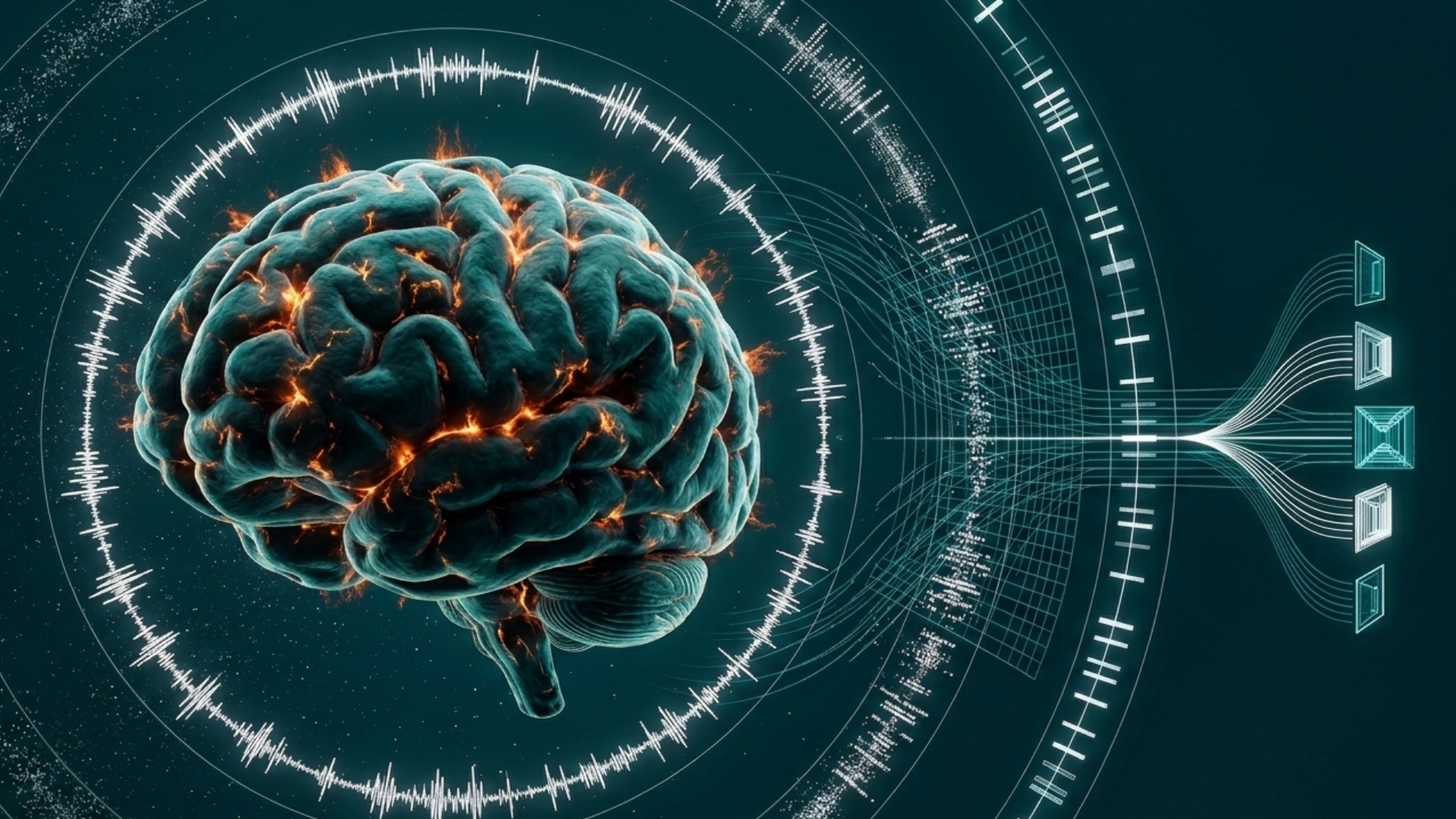
Kaleida Capital invests in NeuroAI infrastructure layer — where neural data, frontier AI, and next-generation computation are beginning to reshape healthcare, intelligence, and human capability.
Connect with us if you are building, investing in, or studying the convergence of neuroscience and artificial intelligence — we welcome the conversation.